 MotionLab
How High Should Your Monitor Be?
MotionLab Editorial · 14 min read · Education
Place the top of the screen at or slightly below eye level, about an arm’s length away. OSHA/Mayo height, bifocals, dual monitors, and laptop fixes. Set the top of the monitor at or slightly below eye level so the screen center sits about 15–20° below your horizontal gaze (OSHA) Keep the display about an arm’s length away — Mayo Clinic and OSHA both cite roughly 20–40 inches (50–100 cm)
Key Takeaways
- ✓Set the top of the monitor at or slightly below eye level so the screen center sits about 15–20° below your horizontal gaze (OSHA)
- ✓Keep the display about an arm’s length away — Mayo Clinic and OSHA both cite roughly 20–40 inches (50–100 cm)
- ✓Bifocal and progressive lens wearers usually need the monitor 1–2 inches lower so they are not tipping the head back
- ✓Height alone is incomplete — center the primary screen, fix laptop fused geometry, and still interrupt static viewing every 20–30 minutes
How High Should Your Monitor Be?
If your neck aches by mid-afternoon or you catch yourself leaning into the screen, the useful question is not which monitor brand to buy. It is how high should your monitor be so your head, neck, and eyes can stay near neutral for real workdays.
The practical answer from OSHA’s computer workstation monitor guidance and Mayo Clinic office ergonomics is consistent: place the top of the screen at or slightly below eye level, keep the display roughly an arm’s length away (about 20–40 inches / 50–100 cm), and center it in front of you. OSHA adds that the center of the screen is normally about 15–20° below horizontal eye level so you look slightly down, not up. If you wear bifocals or progressives, Mayo Clinic recommends lowering the monitor an extra 1–2 inches so you are not tipping your head back to find the near-vision segment.
This guide turns those numbers into a setup order, a dual-monitor layout, laptop and sit-stand caveats, common height mistakes, and the mobility layer that makes a correct screen height stick.
Why Does Monitor Height Matter for Neck and Eyes?
Your head is a heavy load on a flexible stack of cervical vertebrae. When the screen is too low, you flex the neck and round the upper back for hours — the same forward-head pattern covered in tech neck desk posture stretches. When the screen is too high, OSHA notes you tip the head back, which fatigues the muscles that support the skull and can irritate the neck and shoulders just as reliably.
Wrong distance compounds the problem:
- Too far: you lean forward to read small text, losing backrest support and loading the torso.
- Too close: focusing and converging the eyes takes more effort; some people push the chair back and then reach for the keyboard with outstretched arms.
Canadian Centre for Occupational Health and Safety (CCOHS) summaries of viewing-angle research also note that looking above the horizontal is especially tiring, while a mild downward gaze is usually more comfortable — which is why “slightly below eye level” beats “screens at the ceiling.”
Monitor height is not a vanity setting. It is a daily dose of neck flexion, neck extension, or near-neutral posture. Get it wrong and no amount of “sit up straighter” will outwork gravity.
What Is the Correct Monitor Height and Viewing Angle?
Use OSHA’s and Mayo Clinic’s targets as your default, then fine-tune for glasses and screen size.
Height (primary rule)
- Top line / top of the viewing area at or slightly below seated eye level
- Screen center roughly 15–20° below horizontal eye level (OSHA)
- Prefer a mild downward gaze over looking up; CCOHS notes that discomfort from a monitor that is too high tends to be worse than one that is slightly too low
Distance
- About an arm’s length for many adults
- OSHA preferred range: 20–40 inches (50–100 cm) from eyes to the front of the screen
- Mayo Clinic: no closer than about 20 inches and no farther than about 40 inches, straight in front of you and behind the keyboard
- If text is hard to read at that distance, increase font size or display scaling rather than crowding the screen
Alignment
- Primary monitor directly in front of you so head, neck, and torso face forward
- OSHA: avoid placing the main screen farther than about 35° left or right for prolonged work
- Keep printed copy close to the screen when you reference both
Tilt and glare
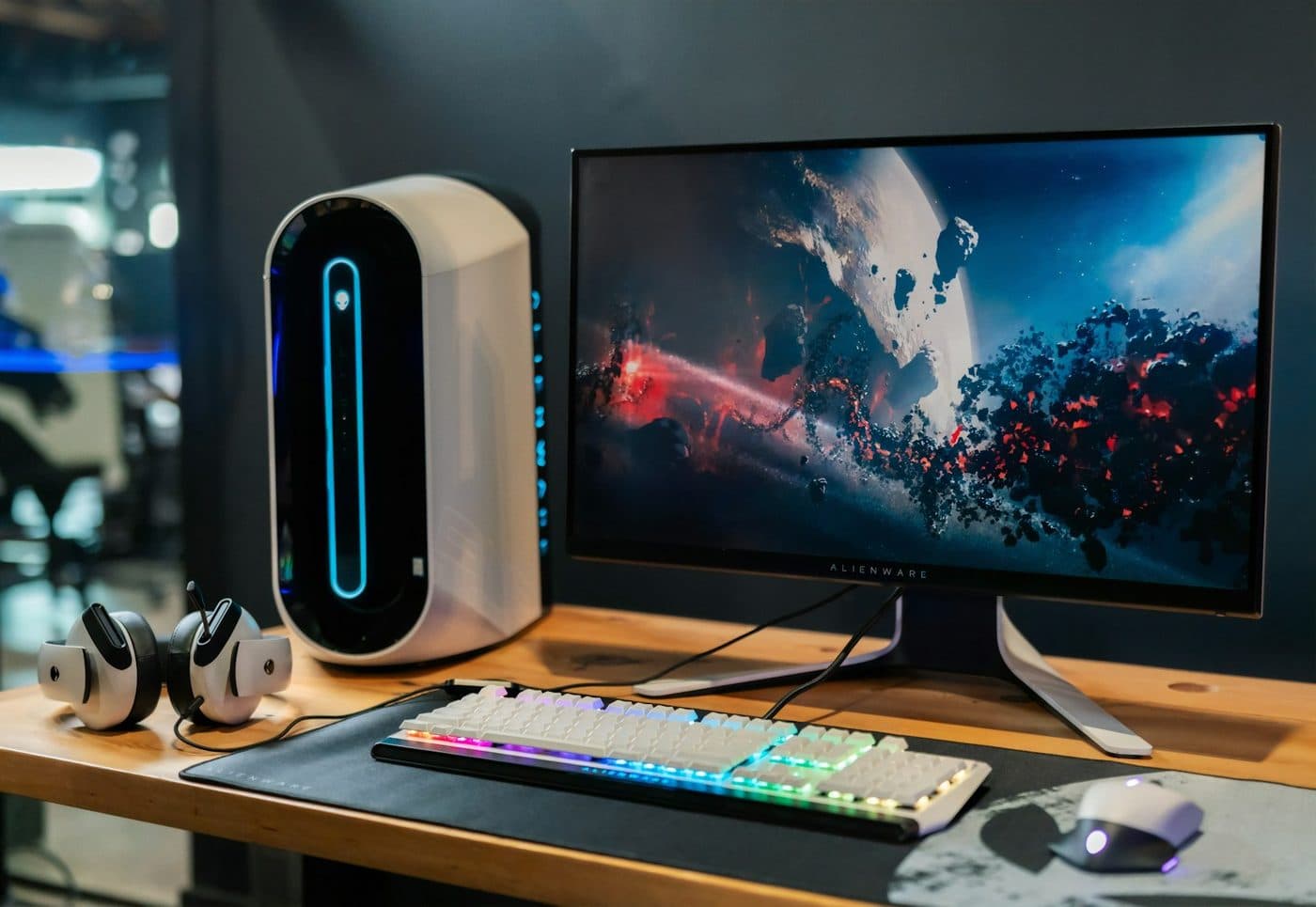
- Tilt the screen so it is roughly perpendicular to your line of sight, often about 10–20° (OSHA)
- Place the monitor roughly perpendicular to windows to cut glare; clean dust that reduces contrast
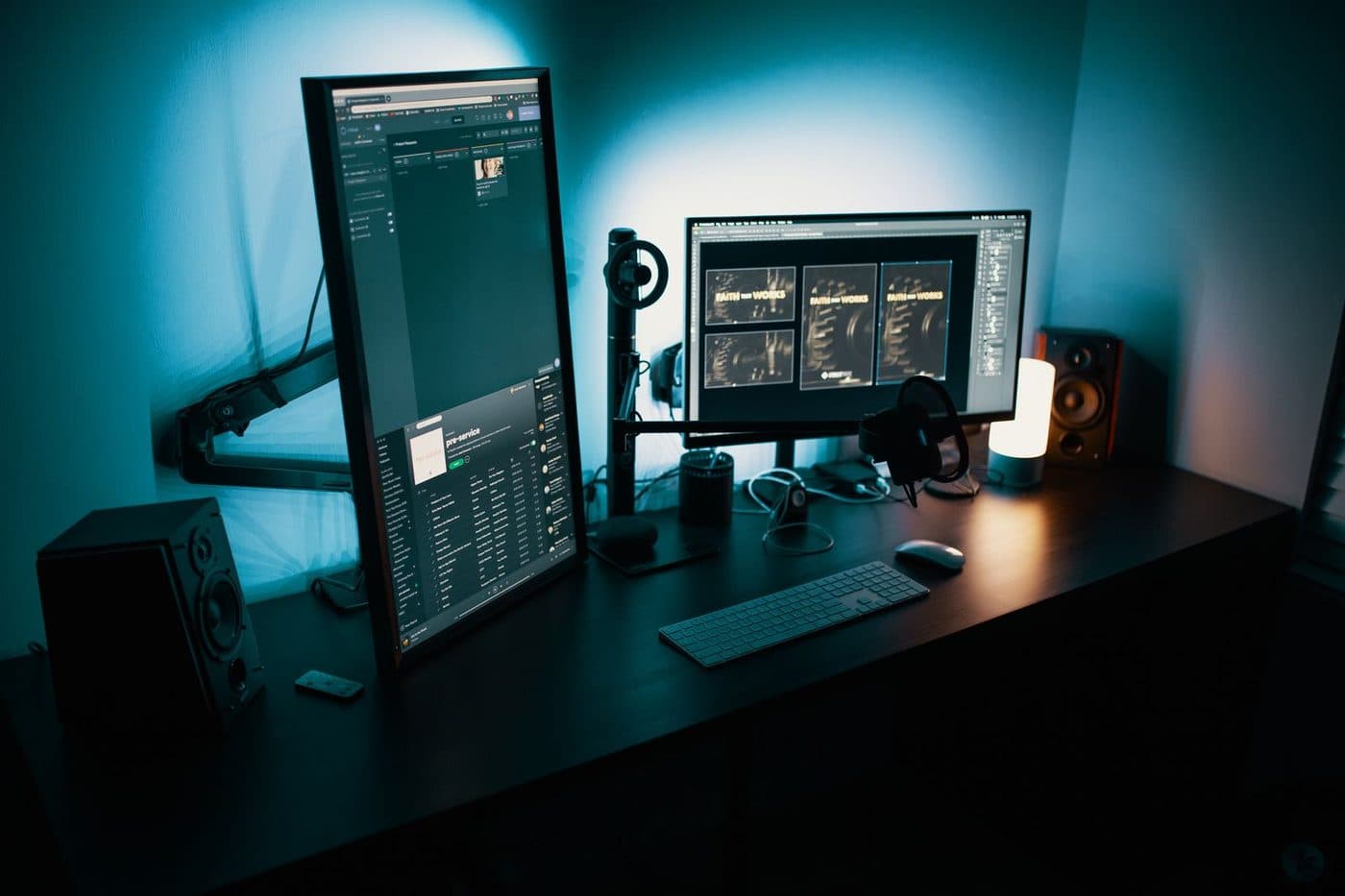
Tall / portrait / ultrawide panels
- CCOHS: for tall or portrait displays, keep the top of the screen no higher than eye level
- Very wide screens may need a bit more distance so you are not constantly rotating the neck to reach the corners
Write your preferred riser height on a sticky note if you hot-desk. Recreating the same eye-level geometry should take under a minute once you know the target.
How Should Bifocal and Progressive Lens Users Set Monitor Height?
Standard “top of screen at eye level” advice assumes single-vision distance lenses or uncorrected vision. Multifocal wearers often look through the lower part of the lenses for near work. If the monitor sits at a “correct” high position, they tip the head back to find that segment — the exact awkward posture OSHA flags for bifocal users.
Practical adjustments (Mayo + OSHA)
- Lower the monitor an additional 1–2 inches (about 2–5 cm) versus the non-bifocal default (Mayo Clinic)
- Or raise the chair until you can view the screen without tipping the head back — then restore foot support with a footrest if needed (OSHA)
- Slightly tilt the screen up toward you if lowering it would otherwise create a harsh angle
- Consider single-vision computer glasses with a focal length designed for monitor distance if you spend most of the day on screens (OSHA lists this as an option)
Do not “power through” a backward head tilt. It is a lens-and-geometry mismatch, not a toughness test. Once height is fixed, pair the setup with the seated checklist in how to sit at a desk without back pain so chair and keyboard still match.
In What Order Should You Adjust Chair, Keyboard, and Monitor?
Chasing screen height first is how people end up with shrugged shoulders or dangling feet. Use the same order as a full desktop setup:
- Chair height — feet flat or on a footrest; thighs roughly parallel to the floor.
- Keyboard and mouse at elbow height — shoulders relaxed, elbows near 90°, wrists relatively straight (Mayo Clinic).
- Monitor height and distance last — top at or slightly below eye level; 20–40 inches away; centered.
- Sit back into the chair. If you still perch on the front edge to see the screen, the display is still too low or too far.

Common conflict
raising the chair to hit eye-level on a fixed monitor can make the desk feel too low for typing — or raising a keyboard tray can leave the screen stranded. Solve conflicts with a monitor arm/riser, a keyboard tray, or a footrest rather than accepting a shrugged-shoulder compromise.
If the “monitor” is still a laptop panel fused to a keyboard, separate them — details in how to set up a laptop for desk work.
How Do You Set Up Dual Monitors Without Twisting Your Neck?
Two screens are only an upgrade if your primary work still lives in front of you. CCOHS dual-monitor guidance maps cleanly onto OSHA’s single-monitor rules:
If you use both monitors equally
- Place them in front of you with edges nearly touching
- Angle them into a gentle semi-circle so you face the gap between them rather than cranking one way all day
- Keep both at the same height (eye level or slightly lower with corrective lenses)
- Stay about an arm’s length from the screens
If one monitor is primary
- Put the primary display directly in front of you as if it were a single monitor
- Park the secondary screen to the side at an angle (half of a semi-circle)
- Keep matching heights so your eyes travel sideways, not diagonally up and down
Laptop + external monitor
treat the external panel as primary whenever possible. Closing the laptop on a dock, or raising it only as a secondary reference, beats hours of neck rotation toward a side laptop.
Ultrawides follow the same logic: center the active window zone in front of you and increase distance if corner content forces constant rotation.
What If Your “Monitor” Is Still a Laptop?
A laptop alone cannot put both the screen and the keyboard in a neutral position. Raise the screen and the built-in keys sit too high; leave the laptop flat and you look down for hours.

Mayo Clinic’s laptop guidance is the same fix used throughout this cluster: external keyboard and mouse plus a laptop stand or external monitor so screen height matches a desktop. For sessions longer than about an hour, that separation is non-negotiable.
Sofa and coffee-table laptop work create the same low-screen problem in a softer costume — fine for short email triage, poor as an eight-hour office. Prefer a table, raise the display when the block grows, and protect walking breaks. Full stand-vs-dock and travel-kit detail lives in how to set up a laptop for desk work.
How Does Monitor Height Change on a Sit-Stand Desk?
When the work surface rises, the screen must rise with it. A classic sitting-desk failure mode becomes a standing-desk failure mode: keyboard at standing elbow height, laptop still low — now you have “standing tech neck.”

Checklist when you change desk height
1. Raise or lower the entire primary display so top-of-screen / eye-level rules still hold while standing. 2. Confirm elbow height on keyboard and mouse with relaxed shoulders. 3. Recheck viewing distance — standing often shifts you slightly closer or farther than your seated sweet spot. 4. Prefer monitor arms or presets that move with you so the correct height is the easy path.
For how long to stand once geometry is right, use how long to stand at a standing desk. Height change is not a substitute for a walking break — see how often to take a walking break from sitting.
How Often Should You Rest Your Eyes and Change Position?
Even textbook monitor height fails if you freeze in front of it. OSHA notes that prolonged monitor viewing can reduce blink rate and contribute to eye fatigue and dryness. Their practical counters:
- Rest the eyes by focusing on a distant target periodically (OSHA’s example: a clock about 20 feet away)
- Look away and blink at regular intervals to re-moisten the eyes
- Alternate computer work with non-screen tasks when you can
Layer musculoskeletal breaks on top:
- Every 20–30 minutes: stand, take 10–60 seconds of steps, or a posture reset
- Every hour when meetings block half-hourly breaks: a fuller 2–5 minute walk
- Micro mobility from desk stretches when you stand — chin tucks, thoracic extension over the chair back, shoulder blade squeezes

Mayo Clinic’s ergonomics guide closes the same way: get up and walk around through the day; stretch hands and arms while seated between larger breaks. Perfect geometry plus zero movement is still a static load.
Which Mobility Moves Pair With Correct Monitor Height?
Hardware removes the forced crane. Mobility reduces how stuck you feel when you do sit and stare.
Prioritise tissues that bad screen height overloads:
- Deep neck flexors and upper trapezius / levator patterns — tech neck desk posture stretches
- Thoracic extension and chest opening — chair extensions, doorway pec stretch; see thoracic spine mobility and how to fix rounded shoulders
- Hip flexors and glutes — screen height does not save you from eight hours of hip flexion; use the desk worker mobility guide
- Wrist and forearm care if mouse reach crept in while you chased screen height — wrist stretches
A realistic daily stack
- Monitor height + centering (this article) as the all-day default
- Micro-break mobility when you stand
- One 8–12 minute fuller block once a day
Sharp, radiating, or progressive neurological symptoms are not a cue to stretch harder — get assessed.
What Mistakes Ruin Monitor Height Setup?
- Parking the monitor on the PC tower “because it looks official.” OSHA warns this often places the screen too high for everyone except the tallest users.
- Raising the screen but typing on a laptop keyboard. Trades neck strain for shrugged shoulders and bent wrists.
- External keyboard with the laptop still flat. Fixes wrists; leaves the neck flexed.
- Primary work on a side monitor. Hours of cervical rotation.
- Matching “eye level” without accounting for bifocals. Creates sustained head-back posture.
- Sitting closer instead of enlarging text. Recreates lean-in torso strain OSHA describes for short viewing distances.
- Sit-stand desk raised without raising the display. Standing laptop hunch.
- Perfect height, zero breaks. Static neutral is still static.
- Chasing gadgets before geometry. Blue-light glasses and vertical mice do not replace top-of-screen / eye-level placement.
When Should Monitor-Related Pain Get Professional Care?
This article is educational, not a diagnosis. Self-experiment with height, distance, and breaks when discomfort is mild, clearly tied to screen posture, and eases when you change position.
Seek personalised medical, physiotherapy, or optometry advice promptly if you have:
- Weakness in an arm, hand, or leg
- Numbness, tingling, or pins-and-needles that persists or spreads
- Sudden vision changes, double vision, or headaches that are new and severe
- Night pain, fever, unexplained weight loss, cancer history, or recent significant trauma
- Progressive neurological deficits, or bowel/bladder changes with back pain (urgent care)
- Pain or eye symptoms that keep worsening despite weeks of sensible monitor setup, walking breaks, and gentle mobility
Imaging, prescriptions, and lens changes are clinician decisions. Most desk-related neck and eye irritation improves with geometry + movement first — but “wait and see” is wrong when nerves or vision are clearly involved.
How Does Monitor Height Fit With Sitting, Standing, and Mobility?
Treat screen comfort as layers:
- Set monitor height, distance, and centering (this article).
- Dial the chair and seated baseline with how to sit at a desk without back pain.
- Separate laptop screen and keyboard using how to set up a laptop for desk work.
- Interrupt sitting with walking-break doses from the walking break guide.
- Add sit–stand transitions using how long to stand at a standing desk.
- Restore tissues with desk stretches, tech neck stretches, and the desk worker mobility guide.
If you want the mobility layer sequenced around your restrictions instead of a generic checklist, MotionLab’s guided sessions are built for short blocks you can run after a posture-change break without changing clothes — start at /signup when you are ready. Keep red-flag decisions with a clinician, not an app.
How High Should Your Monitor Be? FAQ
How high should your monitor be?
Place the top of the screen at or slightly below eye level so you look slightly down at the center of the display. OSHA places that center about 15–20° below horizontal eye level.
How far should a monitor be from your eyes?
Mayo Clinic and OSHA both point to about an arm’s length, commonly 20–40 inches (50–100 cm). Enlarge text before sitting closer.
Should the monitor be above or below eye level?
Prefer at or slightly below eye level. A monitor that is clearly above eye level often drives head-back posture, which OSHA links to neck and shoulder fatigue.
Where should a monitor be if I wear bifocals?
Lower it about 1–2 inches more than the standard recommendation (Mayo Clinic), or raise the chair and support your feet, so you are not tipping your head back to use the near segment of the lenses.
How should dual monitors be positioned?
Keep both at matching height. If one is primary, center it; angle the secondary to the side. If both are equal, create a gentle semi-circle in front of you (CCOHS).
Is a laptop stand enough to fix height?
A stand helps only if you also type on an external keyboard and mouse. Otherwise you trade neck flexion for shrugged shoulders.
Does correct monitor height fix tech neck by itself?
It removes a major daily driver. You still need movement breaks and targeted mobility for tissues that adapted to years of forward head posture.
Sources
Related reading
Put it into practice
Ready to apply what you've learned?
MotionLab builds personalised mobility sessions around your specific restrictions — so every minute you invest targets what you actually need.
Start a session on MotionLab →