 MotionLab
Desk Exercises You Can Do at Work
MotionLab Editorial · 11 min read · Mobility
Six desk exercises you can do at work with just a chair and desk: seated marches, chair squats, desk push-ups, and calf raises, with NHS reps and safety tips. Desk exercises are short strength and movement drills you can do at work with a stable chair and a sturdy desk. Six moves cover your legs, hips, chest, and arms: seated marches, seated heel raises, chair squats, desk push-ups, standing calf raises, and standing leg extensions.
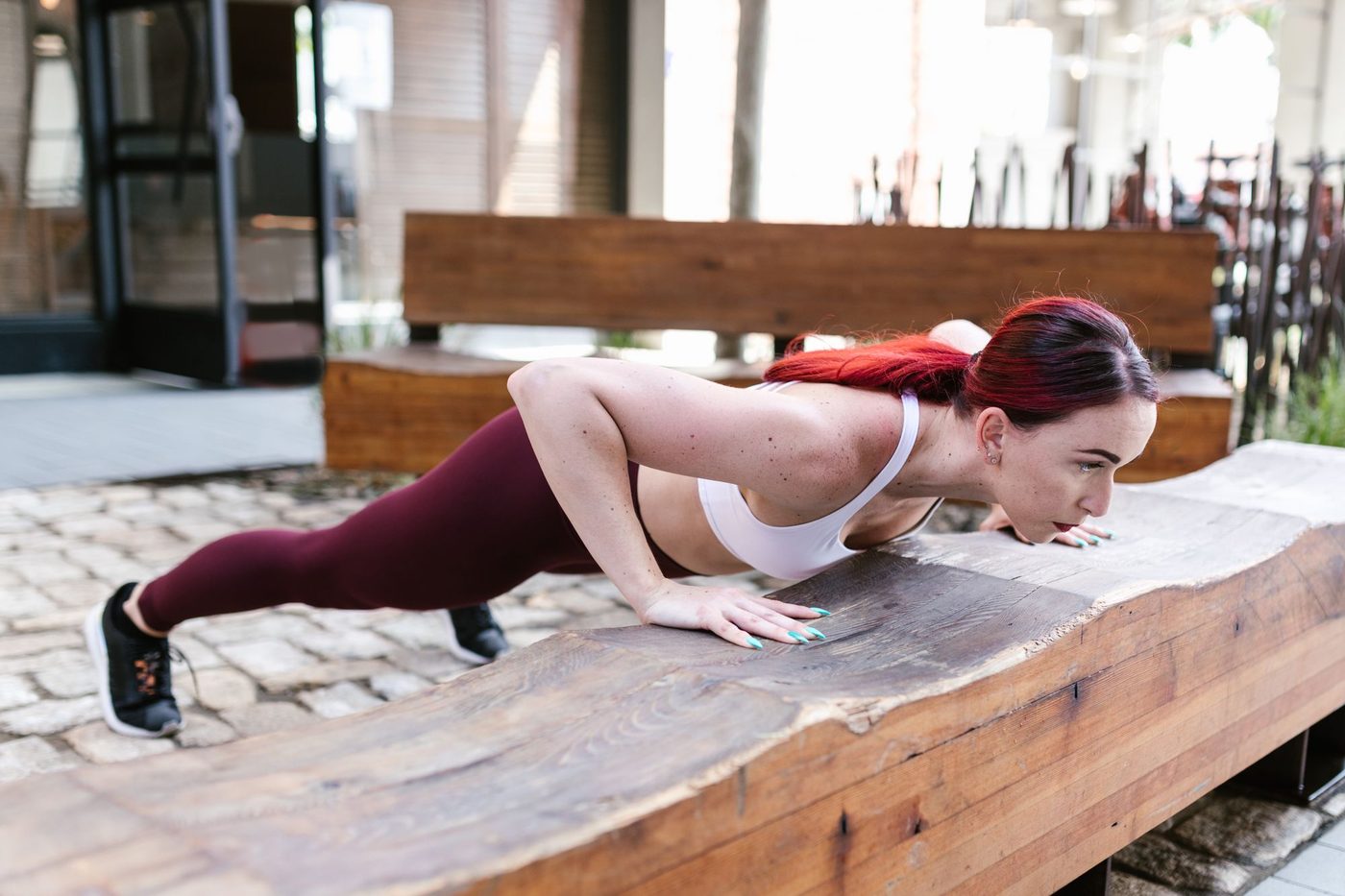
Key Takeaways
- ✓Desk exercises are short strength and movement drills you can do at work with a stable chair and a sturdy desk. They’re different from desk stretches: the goal is to work your muscles and get your blood moving, not just loosen tight spots
- ✓Six moves cover your legs, hips, chest, and arms: seated marches, seated heel raises, chair squats, desk push-ups, standing calf raises, and standing leg extensions. One round takes about 5 minutes
- ✓Reps come from NHS guidance: 5 lifts per leg for seated marches, 5 slow chair squats and calf raises, 3 sets of 5 to 10 push-ups, and leg extensions held for up to 5 seconds, 5 times per leg
- ✓The NHS recommends strengthening activities on at least 2 days a week and breaking up long periods of sitting. Check with a GP first if you haven’t exercised for a while or have a health condition, and stop any move that hurts
Desk Exercises You Can Do at Work
The best desk exercises are simple strength and movement drills you can do in a few minutes with just your chair and desk: marching your knees while seated, raising your heels, standing up and sitting down slowly, doing push-ups against the edge of your desk, and rising onto your toes. They won’t replace a workout, but they break up long sitting and give your muscles some work during the day.
The NHS recommends that adults do strengthening activities that work all the major muscle groups on at least 2 days a week, and break up long periods of not moving with some activity. This guide gives you six desk exercises you can do at work, how many reps to aim for, how often to do them, what the research says, and when to check with a doctor first. If you’re after loosening rather than strengthening, see our guide to desk stretches.
Why Do Desk Exercises at Work?
At a desk, most of your muscles barely work for hours. Your legs stay still, your hips stay bent, and your arms only move your mouse and keyboard. Short bouts of exercise during the day give those muscles something to do.
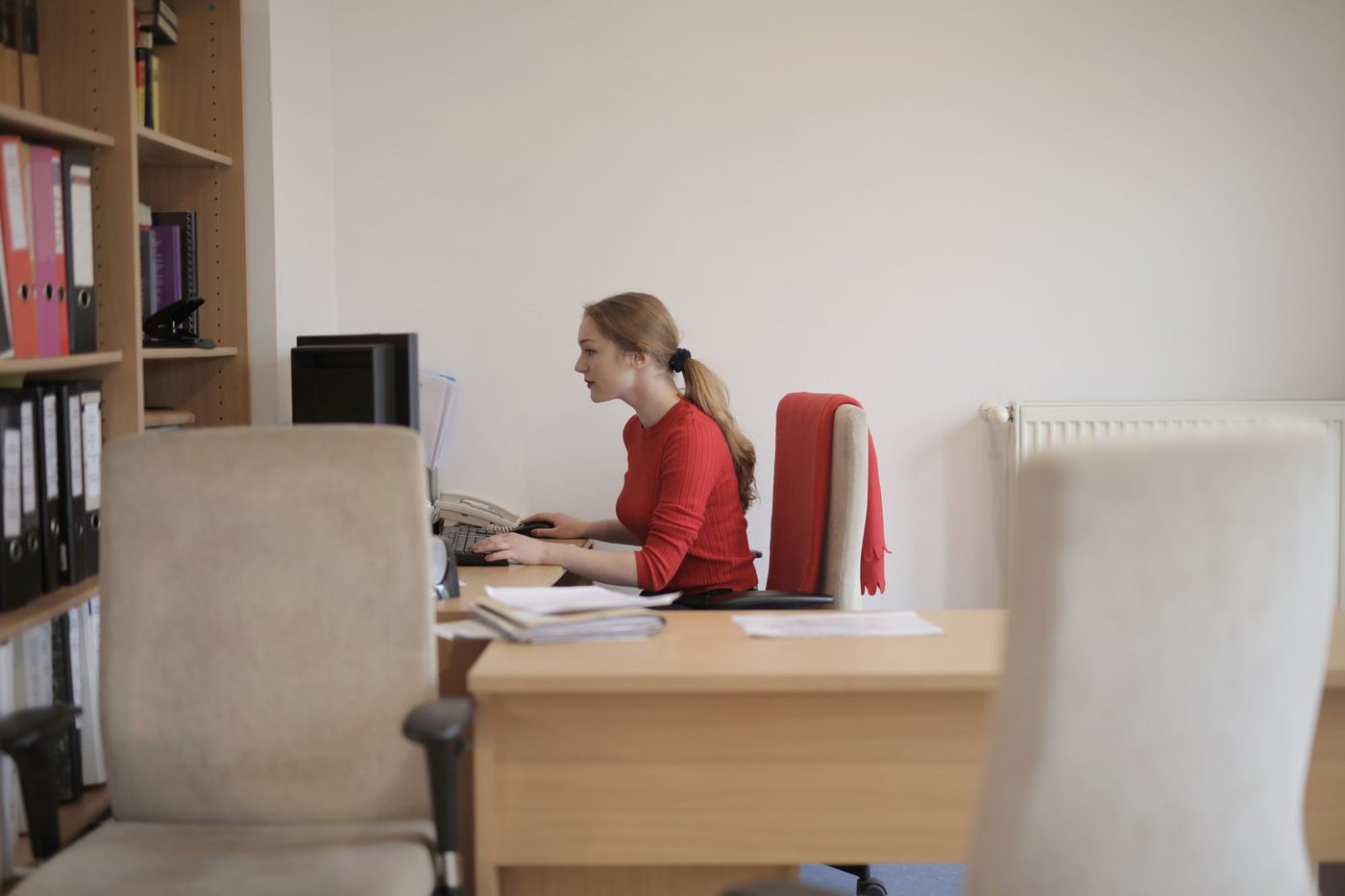
A few findings from the research:
- Moving your legs supports blood flow. In a 2015 study in Medicine & Science in Sports & Exercise, 12 young men sat for 3 hours without moving their legs, and the function of the main artery in the thigh dropped. When they walked for 5 minutes once an hour, it didn’t.
- Short activity breaks can affect blood sugar. In a 2012 study in Diabetes Care, 19 overweight or obese adults aged 45 to 65 had lower blood sugar and insulin after a meal when they broke up sitting with 2-minute walking breaks every 20 minutes, compared with sitting without a break.
- Seated calf work is being studied too. A 2022 lab study in iScience found that a seated heel-raise movement called the soleus push-up reduced the rise in blood sugar after a glucose drink compared with sitting still. It was a small, controlled study, so treat it as promising rather than proven for everyday desk work.
- A little strength work can ease neck and shoulder pain. In a 2011 trial in Pain of 198 office workers with frequent neck and shoulder pain, as little as 2 minutes a day of resistance training with an elastic band, 5 days a week for 10 weeks, reduced pain compared with a control group.
None of this means a few chair squats undo a day of sitting. But regular movement adds up, and desk exercises are easy to fit in. Here’s how often to take a walking break from sitting.
6 Desk Exercises You Can Do at Work
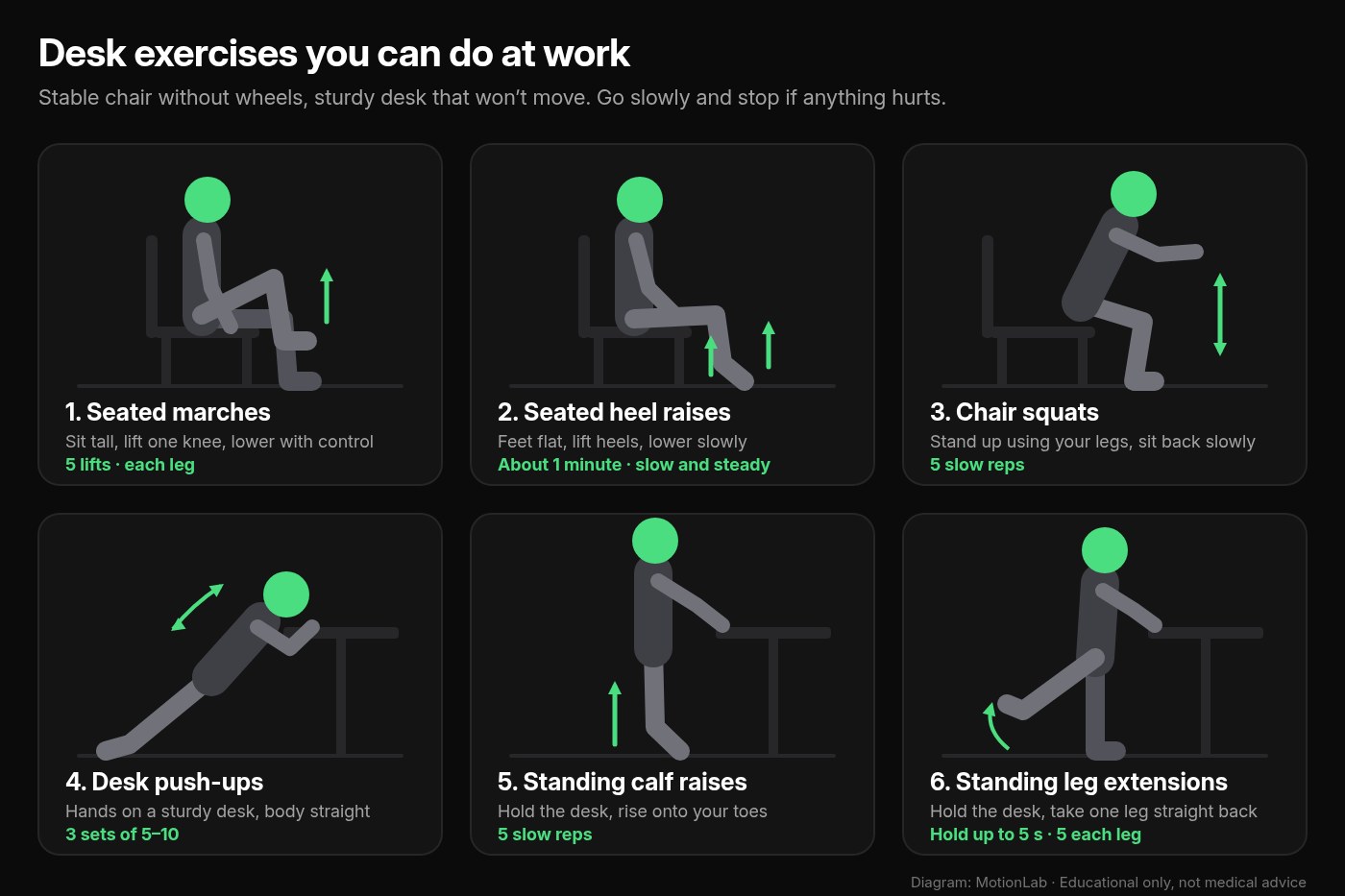
Use a solid, stable chair without wheels, as the NHS recommends, and a desk that won’t slide or tip when you lean on it. Wear shoes that grip, breathe normally, and move slowly. If a move hurts, stop.
1. Seated marches
Sit upright, away from the back of the chair, and hold the sides of the seat. Lift one knee as far as is comfortable, then place your foot down with control. Switch legs. The NHS calls this hip marching, suggests 5 lifts with each leg, and says it can strengthen your hips and thighs and improve flexibility.
2. Seated heel raises
Sit with your feet flat on the floor and your knees bent at about a right angle. Lift your heels as high as you comfortably can while keeping your toes down, then lower them slowly. Keep a steady rhythm for about a minute. This is the movement behind the soleus push-up studied in iScience, and it works your calves without leaving your seat.
3. Chair squats
Sit on the front edge of your chair with your feet hip-width apart. Lean slightly forward and stand up using your legs, not your arms, then slowly sit back down. The NHS calls this sit-to-stand, suggests aiming for 5 repetitions, and notes that the slower you go, the better.
4. Desk push-ups
Make sure your desk is sturdy and won’t move. Place your hands on the edge, a little wider than your shoulders, and walk your feet back until your body is in a straight line. Bend your elbows to lower your chest towards the desk, then push back up. The NHS suggests 3 sets of 5 to 10 for its wall press-up. A desk is lower than a wall, so it’s harder; start at a wall if you’re new to push-ups.
5. Standing calf raises
Stand behind your chair or next to your desk and hold it for balance. Rise up onto your toes, then lower your heels slowly. The NHS suggests 5 repetitions to start, building up as it gets easier.
6. Standing leg extensions
Stand facing your desk and hold it with both hands. Keeping your leg straight, take one leg backwards without bending your knee or arching your back. The NHS says you should feel the effort in the back of your thigh and your bottom, and suggests holding for up to 5 seconds and repeating 5 times with each leg.
Short on time?
Do seated heel raises under your desk while you read, and 5 slow chair squats each time you stand up. Together they take about two minutes. If your hips or legs feel tight afterwards, follow up with hip stretches at your desk or leg stretches at your desk.
How Often Should You Do Desk Exercises?
There’s no single official dose for desk exercises, but health guidance and research give a useful range:
- Strength work at least twice a week. The NHS suggests doing its strength exercises at least twice a week and building up slowly. Its physical activity guidelines say strengthening exercises should be done to the point where you need a short rest before repeating, and list bodyweight moves like push-ups as examples.
- Move little and often. The King’s College Hospital NHS leaflet suggests micro breaks every 20 minutes, taking 20 seconds to reset your posture, change position, stretch, or move. The Newcastle Hospitals leaflet says it’s important to change position and move your joints every 30 minutes.
- Short sessions still count. In the 2011 office worker trial, the 2-minute daily group still saw less neck and shoulder pain than the control group.
- Breaks matter as much as the exercises. In a 2007 NIOSH field study of 51 data-entry workers, adding four extra 5-minute breaks to the workday lowered discomfort and eyestrain, and work output held up despite the lost time.
- Workplace programs can help. A 2018 randomized trial of 142 office workers with neck, shoulder, and lower back pain found that a workplace stretching program reduced pain scores compared with a control group, a reminder that a routine you do at your desk can make a difference.
A practical plan: do seated marches or heel raises whenever you’ve been still for a while, run the full six-move routine once mid-morning and once mid-afternoon on at least two days a week, and stand up and walk at least once an hour.
If you’d rather follow a routine than remember one, MotionLab builds guided mobility sessions of 7, 15, or 25 minutes around your stiff spots, like your hips, hamstrings, and upper back, using AI powered by Gemini. MotionLab is live on the web and Android. Start at /signup when you’re ready.
Desk Exercises vs Desk Stretches: What’s the Difference?
Desk exercises and desk stretches work well together, but they do different jobs.
- Desk exercises make your muscles work against your body weight. Chair squats, push-ups, and calf raises build strength and get your heart and blood moving a little.
- Desk stretches ease tension in muscles that stay in one position all day. You move slowly to a gentle pull and hold it. The Mayo Clinic suggests stretching until you feel a slight pull and stopping if you feel pain.
A good desk routine mixes both: a few exercises to wake your muscles up, then a stretch or two for whatever feels tight. Our desk stretch guides cover each area:
- Neck stretches at your desk
- Shoulder stretches at your desk
- Chest stretches at your desk
- Upper back stretches at your desk
- Lower back stretches at your desk
- Wrist stretches at your desk
For a full routine for desk workers, see our desk worker mobility guide.
Common Mistakes With Desk Exercises
- Using a chair with wheels. A rolling chair can slide out from under you during chair squats or when you hold it for balance. Use a solid chair without wheels.
- Leaning on a desk that moves. Push-ups against a desk on wheels, a light table, or a sit-stand desk that wobbles are a fall risk. If in doubt, use a wall.
- Pushing up with your arms in chair squats. The NHS says to stand up using your legs, not your arms. Slide your feet back a little and lean forward if you find it hard.
- Letting your hips sag in desk push-ups. Keep your body in a straight line from your head to your heels. If your back sags, move your hands higher, onto a wall.
- Arching your back in leg extensions. Keep the movement small and feel it in the back of your thigh and bottom, not your lower back.
- Rushing the reps. Slow, controlled reps are safer and work your muscles harder. Fast, bouncy reps rely on momentum.
- Holding your breath. Breathe normally through each exercise.
For a better setup between exercise breaks, here’s how to adjust your office chair and how long to stand at a standing desk.
When Should You Check With a Doctor?
This article is general information, not medical advice. Desk exercises are gentle, but they aren’t right for everyone. The NHS advises speaking to a GP first if you haven’t exercised for some time or have medical conditions or concerns. Stop any exercise that causes pain.
Call 999 (or your local emergency number) if you get chest pain or shortness of breath
Pain and swelling in one leg with chest pain or shortness of breath can mean a blood clot has reached your lungs, which the NHS says can be life-threatening.
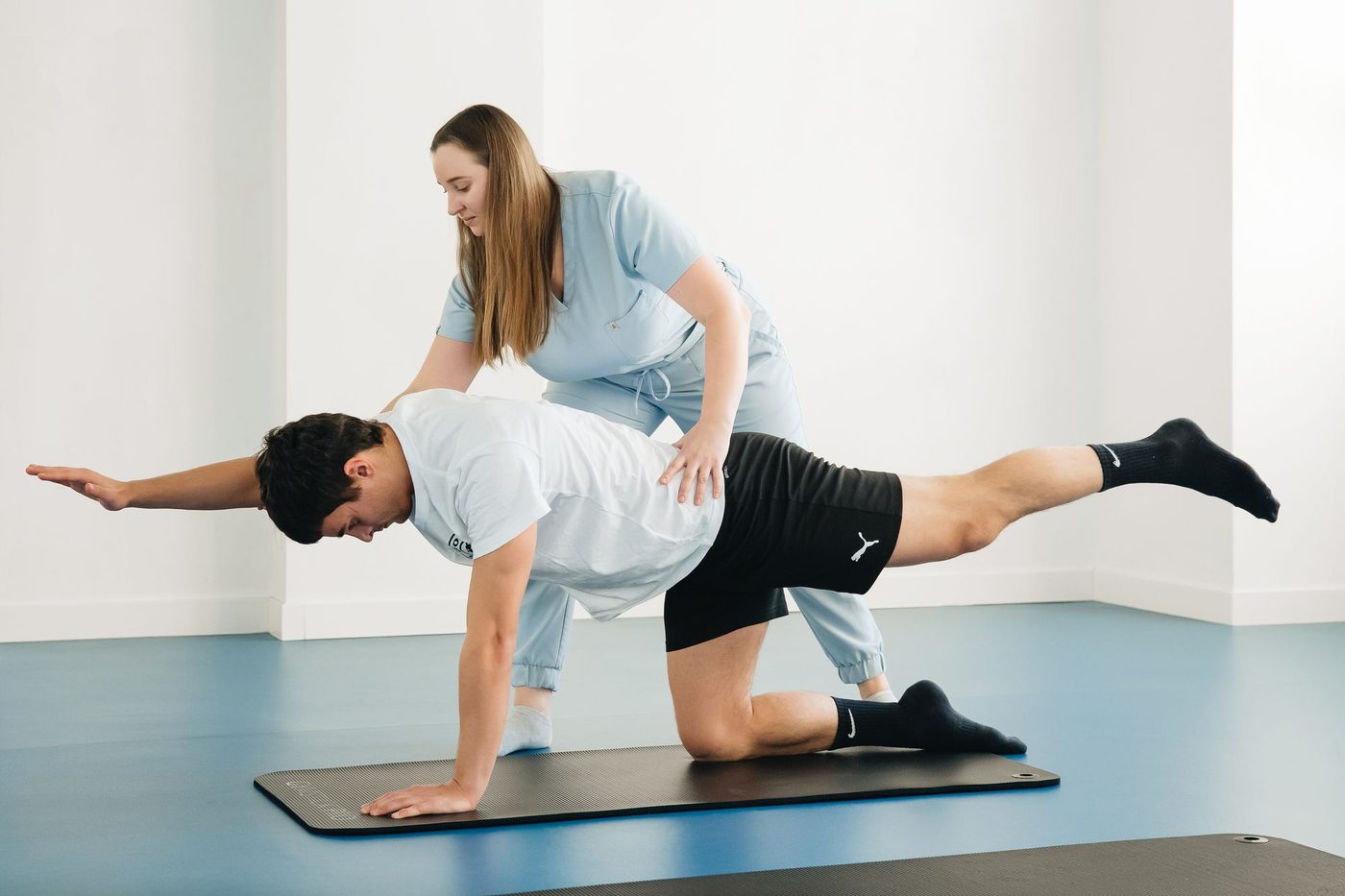
Check with a GP or physiotherapist before starting if you:
- Have joint pain in your knees, hips, shoulders, or wrists that gets worse with movement
- Are recovering from an injury or surgery
- Have a heart or blood pressure condition, or get dizzy when you stand up
- Have balance problems or have had a fall recently
- Are pregnant and haven’t been given advice about exercise
Ask for an urgent GP appointment or call 111 if you have throbbing pain or swelling in one leg, as the NHS lists these as symptoms of DVT (deep vein thrombosis). A physiotherapist can also check how you move and give you exercises that suit you.
Desk Exercises FAQ
What exercises can I do at my desk?
Good options are seated marches, seated heel raises, chair squats, desk push-ups, standing calf raises, and standing leg extensions while holding your desk. All six need only a stable chair without wheels and a sturdy desk, and one round takes about 5 minutes.
How many reps should I do of each desk exercise?
NHS guidance suggests 5 lifts with each leg for seated marches, 5 slow chair squats and 5 calf raises to start, 3 sets of 5 to 10 push-ups against a wall, and leg extensions held for up to 5 seconds, 5 times with each leg. Build up slowly as they get easier.
How often should I do desk exercises?
The NHS recommends strengthening activities on at least 2 days a week and breaking up long periods of sitting. A practical plan is a full round mid-morning and mid-afternoon, plus a few seated marches or heel raises whenever you’ve been still for a while.
Can I do desk exercises without anyone noticing?
Yes. Seated marches and seated heel raises can be done under your desk while you read or listen on a call. Chair squats fit in naturally whenever you stand up. Save push-ups, calf raises, and leg extensions for when you have a minute to yourself.
Are desk exercises better than desk stretches?
They do different jobs. Desk exercises make your muscles work and get your blood moving, while desk stretches ease muscles that feel tight from holding one position. A good routine mixes both, and neither replaces getting up and walking regularly.
Are desk exercises safe for everyone?
They’re gentle, but check with a GP first if you haven’t exercised for a while, have a heart condition, joint pain, balance problems, or are recovering from an injury. Use a chair without wheels and a desk that won’t move, and stop any exercise that causes pain.
Sources
Related reading
- Desk Stretches: 9 Moves to Undo 8 Hours of Sitting (Most Without Leaving Your Chair)
- The Dead Hang Challenge: The Viral Exercise That's Fixing Posture, Grip, and Back Pain in 2026
- The Desk Worker's Mobility Guide: Undoing 8 Hours of Sitting in 15 Minutes
- Chest Stretches You Can Do at Your Desk
- The 9 Best Glute Stretches for Tight, Overworked Glutes — and Why Most People Skip Them
- Shoulder & Thoracic Spine Guide
Put it into practice
Ready to apply what you've learned?
MotionLab builds personalised mobility sessions around your specific restrictions — so every minute you invest targets what you actually need.
Start a session on MotionLab →